26. Books on Democratization
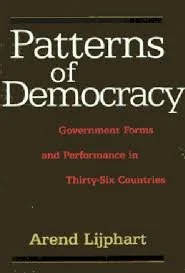

The literature on democratization, transition, and consolidation is vast, but a few foundational and contemporary works stand out as essential reading for understanding these political processes.
1. Foundational Texts on Transition
These works defined the "transitology" school of thought, focusing on how regimes move away from authoritarianism.
"The Third Wave: Democratization in the Late Twentieth Century" by Samuel P. Huntington (1991):
Huntington identifies three historical "waves" of democracy. He famously outlines the five main factors—including economic growth and military failure—that triggered the most recent surge of democratization starting in 1974.
"Transitions from Authoritarian Rule" by Guillermo O’Donnell, Philippe C. Schmitter, and Laurence Whitehead (1986):
Often referred to as "the little green book," this four-volume work is the first systematic comparison of transitions across regions. It emphasizes that transitions are often led by "soft-liners" within an authoritarian regime who negotiate with "moderates" in the opposition.
2. Theories of Consolidation
These books address what happens after the transition—how democracy becomes "the only game in town."
"Problems of Democratic Transition and Consolidation" by Juan Linz and Alfred Stepan (1996):
This is the definitive text on consolidation. The authors argue that for a democracy to be consolidated, it must meet five interconnected requirements: a robust civil society, a political society, the rule of law, a state bureaucracy, and an economic society.
"Polyarchy: Participation and Opposition" by Robert Dahl (1971):
Dahl introduces the term Polyarchy to describe real-world democracies. He argues that democratization requires moving along two axes: Inclusiveness (the right to participate) and Public Contestation (the right to oppose the government).
3. Economic and Institutional Perspectives
These works look at the underlying structural and economic causes that make democratization possible or stable.
"Economic Origins of Dictatorship and Democracy" by Daron Acemoglu and James A. Robinson (2006):
Using game theory, the authors argue that elites concede to democracy when the threat of revolution is high and the cost of repression is even higher. Democracy serves as a "credible commitment" by elites to redistribute wealth to the citizens.
"Democracy and Development: Political Institutions and Well-Being in the World, 1950–1990" by Adam Przeworski et al. (2000):
This is a data-heavy study that famously argues that while economic development doesn't necessarily start democracy, it is the best predictor of whether a democracy will survive.
4. Modern Perspectives on "Democratic Backsliding"
As global trends shifted in the 2020s, scholars began focusing on how consolidated democracies can fail.
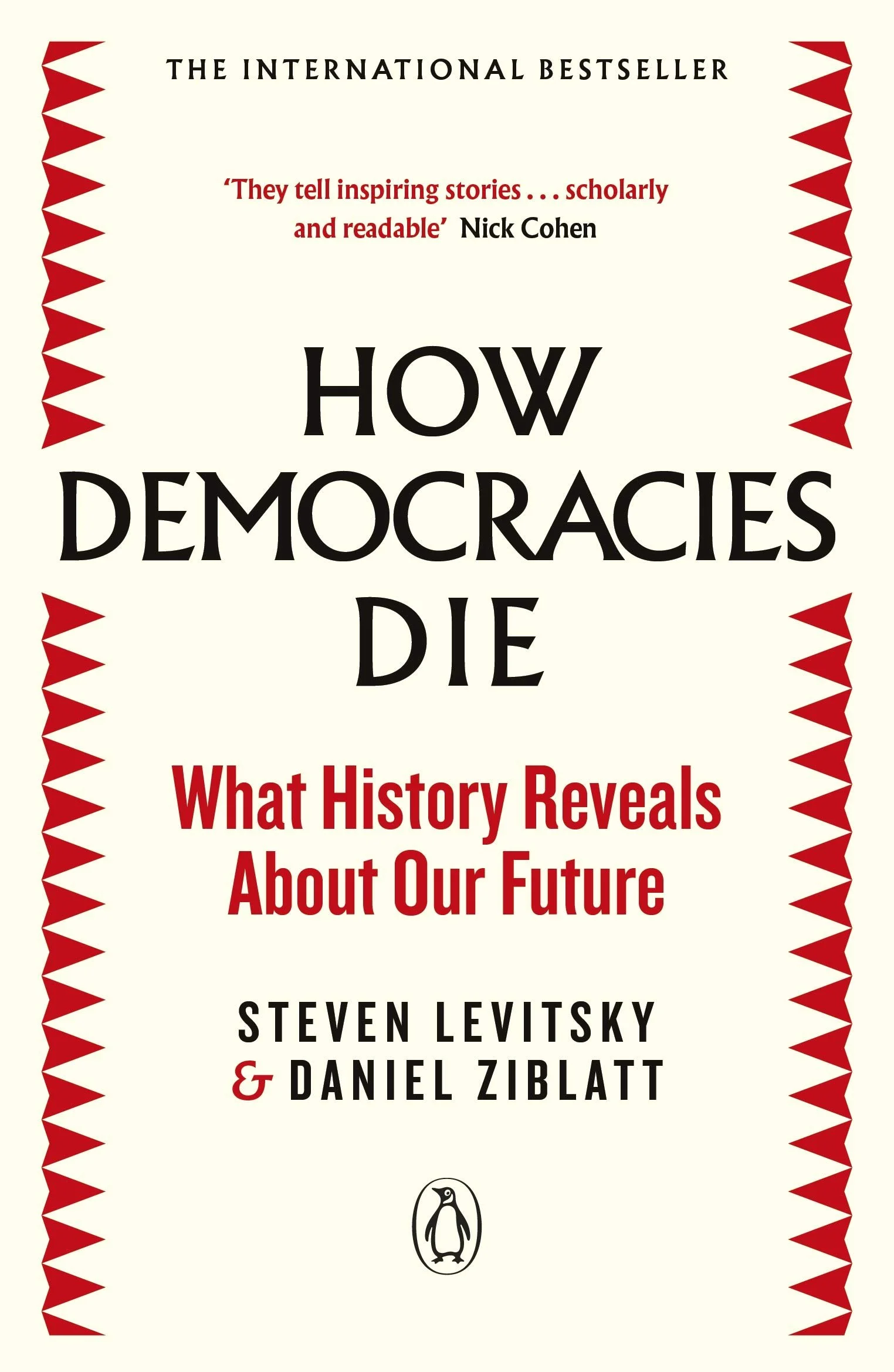
"How Democracies Die" by Steven Levitsky and Daniel Ziblatt (2018):
The authors argue that modern democracies rarely die through military coups; instead, they are eroded from within by elected leaders who subvert democratic norms like "mutual toleration" and "institutional forbearance."
"Democracy Report 2026: Unraveling The Democratic Era?" by the V-Dem Institute (2026):
While not a traditional book, this annual report is the primary academic resource for tracking the "third wave of autocratization." The 2026 edition highlights that global democracy levels have receded to late-1970s levels, with many countries experiencing a reversal of their previous consolidation.
The Role of Elite Bargaining
These books focus on the strategic "negotiations" that happen behind closed doors during a transition.
"Negotiating Democracy: Transitions from Authoritarian Rule" by Gretchen Casper and Michelle Taylor-Robinson (1996): The authors argue that the difficulty of the negotiation process itself predicts success. They suggest that when elites are forced to undergo a hard, high-stakes bargaining process, they are more likely to create durable institutions that lead to consolidation than when a transition is "too easy."
"Developing Democracy: Toward Consolidation" by Larry Diamond (1999): Diamond is a central figure in the study of consolidation. He distinguishes between "electoral democracy" (just holding elections) and "liberal democracy" (which includes the rule of law and civil liberties). He argues that consolidation requires a "deepening" of democratic culture across both the elite and the mass public.
If you are looking for the most cited modern scholars in this field, search for recent papers and lectures by:
Larry Diamond (Consolidation and the "Democratic Recession")
Steven Levitsky (Competitive Authoritarianism and Backsliding)
Staffan Lindberg (Director of the V-Dem Institute, focusing on global democratization trends)
Azmi Bishara (Transitions in the Global South and Arab world)
References
Bishara, A. (2026). Arduous Paths: On the Theory and Practice of Democratic Transition. Oxford University Press.
Bratton, M., & van de Walle, N. (1997). Democratic Experiments in Africa: Regime Transitions in Comparative Perspective. Cambridge University Press.
Casper, G., & Taylor-Robinson, M. M. (1996). Negotiating Democracy: Transitions from Authoritarian Rule. University of Pittsburgh Press.
Diamond, L. (1999). Developing Democracy: Toward Consolidation. Johns Hopkins University Press.
Linz, J. J., & Stepan, A. (1996). Problems of Democratic Transition and Consolidation: Southern Europe, South America, and Post-Communist Europe. Johns Hopkins University Press.
Welzel, C. (2013). Freedom Rising: Human Empowerment and the Quest for Emancipation. Cambridge University Press.
