18. ‘Leadership’- Hugges Ginnett and Curphy
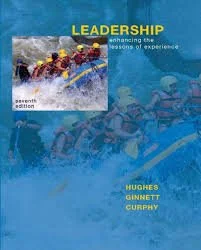
Table of Contents:
The standard structural layout of Leadership: Enhancing the Lessons of Experience by Richard L. Hughes, Robert C. Ginnett, and Gordon J. Curphy is systematically organized around their foundational interactional framework: the Leader, the Followers, and the Situation.
The formal table of contents is structured into four core macro-parts, seamlessly pairing theoretical concepts with highly actionable, practical leadership skill chapters:
PART ONE: Leadership Is a Process, Not a Position
Chapter 1: What Do We Mean by Leadership?
Chapter 2: Leader Development
Chapter 3: Skills for Developing Yourself as a Leader
PART TWO: Focus on the Leader
Chapter 4: Power and Influence
Chapter 5: Values, Ethics, and Character
Chapter 6: Leadership Attributes (Personality traits, cognitive intelligence, and emotional competencies)
Chapter 7: Leadership Behavior (Styles, task vs. relationship orientation, and performance metrics)
Chapter 8: Skills for Building Personal Credibility and Influencing Others
PART THREE: Focus on the Followers
Chapter 9: Motivation, Performance, and Effectiveness
Chapter 10: Satisfaction, Engagement, and Potential (Diving into team buy-in and organizational commitment)
Chapter 11: Groups, Teams, and Their Leadership (Focusing on team dynamics and systemic performance models like the Rocket Model)
Chapter 12: Skills for Developing Others (Coaching, feedback systems, and delegation protocols)
PART FOUR: Focus on the Situation
Chapter 13: The Situation (Analyzing environmental factors, task structures, and organizational culture)
Chapter 14: Contingency Theories of Leadership
Chapter 15: Leadership and Change (Overcoming resistance, strategic visioning, and execution)
Chapter 16: The Dark Side of Leadership (Destructive leadership styles and managerial derailment)
Chapter 17: Skills for Optimizing Leadership as Situations Change
Note on Editions: The structure above aligns with the recent comprehensive editions (9th and 10th editions), which split motivation, engagement, and team dynamics into distinct analytical segments to provide a much cleaner distinction between individual follower metrics and collective team output.
Leadership: Enhancing the Lessons of Experience by Richard L. Hughes, Robert C. Ginnett, and Gordon J. Curphy is widely considered the gold-standard textbook on leadership development. Written by three organizational psychologists, this book bridges the massive gap between dry academic theory and fluffy "how-to" executive memoirs.
Its foundational premise is simple: Leadership is a process, not a position. It is a dynamic interaction that can be studied, practiced, and significantly improved by actively reflecting on real-world experiences.
The Core Analytical Blueprint: The Interactional Framework
Before diving into the chapters, it is essential to understand the "secret sauce" of this book. The authors analyze every leadership scenario through a simple yet powerful lens called the Interactional Framework (also known as the L-F-S model). They argue that leadership is always a function of three overlapping variables:
The Leader: Their personality, values, skills, and unique background.
The Followers: Their expectations, competence, motivation, and group dynamics.
The Situation: The environment, organizational culture, governance structures, and immediate crises.
Chapter-by-Chapter Briefing
The book is traditionally structured into sequential parts that systematically build on this framework.
Chapter 1: What Do We Mean by Leadership?
The authors define leadership as an interpersonal process of influence. They establish a critical distinction that trips up many executives: Leadership vs. Management. Management focuses on efficiency, maintaining order, stability, and controlling systems. Leadership is about vision, aligning people, driving change, and navigating ambiguity.
Chapter 2: Leader Development
This chapter details how leaders actually grow. The authors introduce the A-O-R Model (Action-Observation-Reflection). True development doesn’t happen just by having an experience; it happens when a leader actively reflects on what they observed during that action to alter future behavior.
Chapter 3: Skills for New Leaders
A highly practical chapter acting as a baseline guide for individuals stepping into command for the first time. It provides a blueprint for the first 90 days, focusing heavily on diagnosing the environment, setting clear expectations, and building initial operational trust.
Chapter 4: Power, Influence, and Influence Tactics
This chapter explores how things actually get done in organizations. It breaks down French and Raven’s five bases of power (Expert, Referent, Legitimate, Reward, Coercive) and details specific influence tactics (e.g., rational persuasion, inspirational appeals, and consultation), showing when to deploy each depending on the bureaucratic landscape.
Chapter 5: Values, Ethics, and Character
The authors argue that a leader's personal values dictate the organizational culture. This chapter digs into ethical dilemmas, the "dark side" of leadership, and destructive leadership traits (such as narcissism or micromanagement) that can erode institutional legitimacy.
Chapter 6: Leadership Attributes (Personality and Intelligence)
Using the "Big Five" personality model and various intelligence frameworks, the authors analyze how natural traits influence leadership capability. They distinguish between analytical intelligence and practical intelligence, showing that a high $IQ$ matters less than a leader’s situational adaptability.
Chapter 7: Leadership Behavior
Moving from who a leader is to what a leader does, this chapter focuses on the two primary dimensions of leadership behavior: Task-oriented behaviors (initiating structure, getting the job done) and Relationship-oriented behaviors (showing consideration, supporting people).
Chapter 8: Skills for Optimizing Leadership as an Individual
This section acts as a personal toolkit for the reader. It provides psychological, research-backed strategies on active listening, assertiveness, conducting effective meetings, and managing personal stress under institutional pressure.
Chapter 9: Motivation, Satisfaction, and Performance
A deep dive into why people work. The authors review classic motivational frameworks (like Maslow's hierarchy and Expectancy Theory). The core takeaway is that a leader cannot directly "force" motivation; instead, they must design an environment where followers find intrinsic reward in performance.
Chapter 10: Groups, Teams, and Their Development
This chapter addresses the complex world of group dynamics. It covers the stages of team development (Forming, Storming, Norming, Performing) and uses the authors' own Team Effectiveness Model to help leaders diagnose why a specific committee, unit, or board is failing to meet goals.
Chapter 11: Skills for Building and Leading Teams
A companion to Chapter 10, this provides concrete operational skills. It focuses on how to resolve conflicts within a group, how to build psychological safety, and how to champion high-stakes delegation without losing institutional control.
Chapter 12: The Situation (Characteristics of the Environment)
The book shifts its focus entirely to the "S" of the L-F-S model. It looks at how organizational culture, bureaucratic structures, task complexity, and broader societal or economic shifts dictate what kind of leadership style will succeed or fail.
Chapter 13: Contingency Theories of Leadership
This chapter reviews classic academic models (like Fiedler’s Contingency Model and the Path-Goal Theory). The central thesis is that there is no single "best" style of leadership. The most effective style completely depends on matching the leader's behavior to the situational maturity of the followers.
Chapter 14: Leadership and Change
Tackling the hardest part of administration: institutional reform. The authors present frameworks for managing resistance to change, outlining how to build a sense of urgency, create a compelling strategic vision, and anchor new approaches into an existing organizational culture.
Chapter 15: The Dark Side of Leadership
An incredibly honest look at leadership failure. The authors analyze why seemingly successful leaders derail, pointing to toxic habits, cognitive blind spots, and the "Abilene Paradox"—where a group collectively agrees on a course of action that no individual member actually wants, simply because they fail to communicate.
Chapter 16: Skills for Mastering the Dynamic Process
The text concludes by synthesizing the entire journey. It challenges the leader to use all the tools—personality assessments, behavioral theories, and situational diagnostics—to build a lifelong plan for continuous self-evolution.
Overall Summary & Practical Value
If you are a professional operating within structured environments—such as public administration, the civil service, or corporate management—this book is an invaluable asset.
Why It Stands Out
It Rejects One-Size-Fits-All Formulas: Unlike books that claim "you must always be charismatic" or "you must always be democratic," Hughes, Ginnett, and Curphy prove that a great leader must be an amateur psychologist and a keen environmental observer. You must read the room and the system before you act.
Balanced Rigor: Every claim is backed by empirical data, yet illustrated with highly engaging real-world case studies (ranging from military commanders like Colin Powell to corporate turnarounds and historical survival dramas).
The Ultimate Takeaway
Leadership is an ongoing, reflective practice. By organizing your thoughts around The Leader, The Follower, and The Situation, you gain a diagnostic toolkit. When an initiative fails or a team stagnates, this framework allows you to step back, look objectively at the interlocking pieces of the puzzle, and accurately identify exactly which lever needs to be pulled to steer the ship back on course.
